By AURA Private Yachting ·
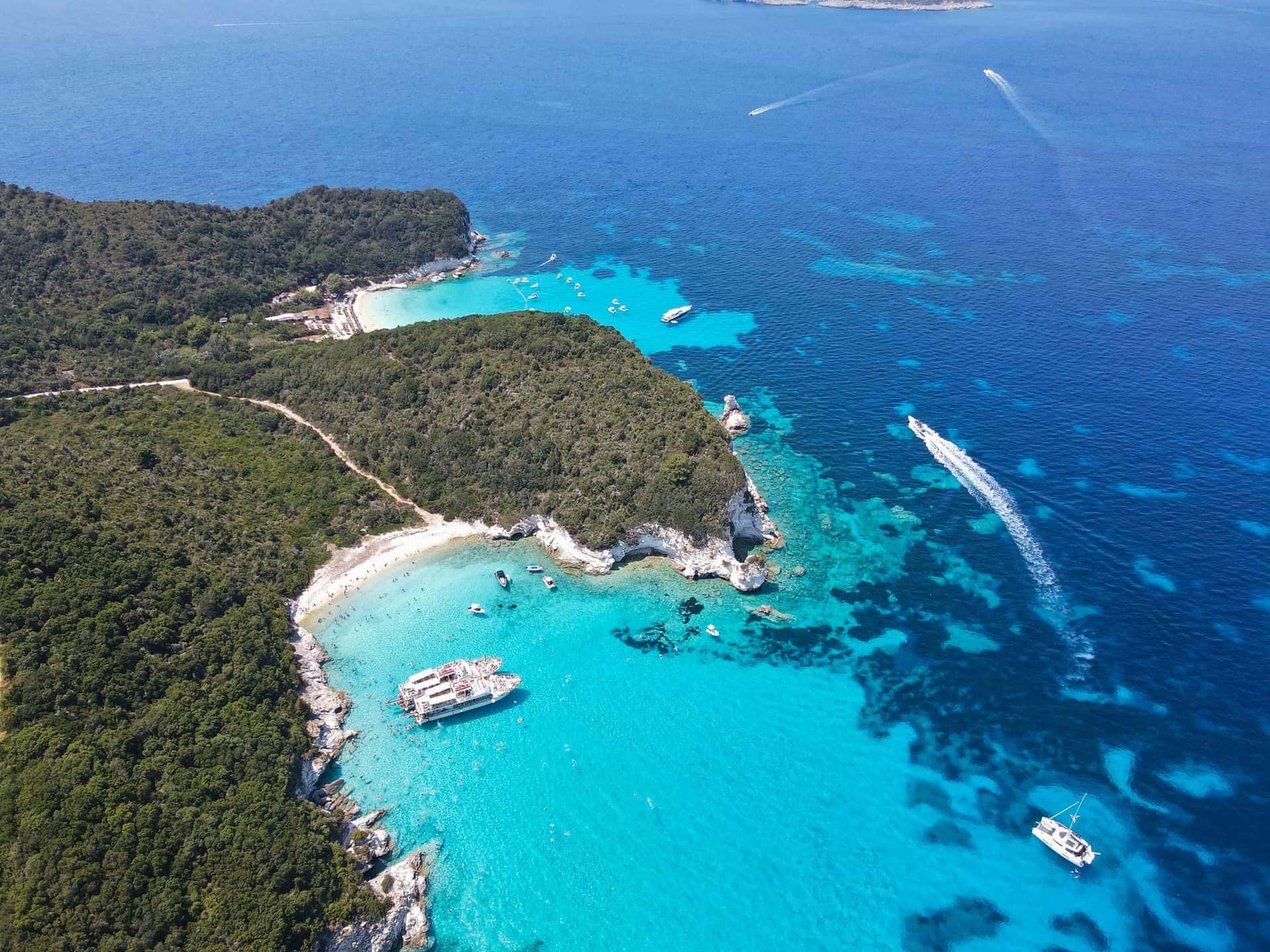
The Paxos sea caves are located on the island's rugged west coast and can only be reached by boat. Ipapanti is the largest — a dramatic open cavern with vivid blue water — while Kastanida, nearby, is famous for the intense colour of its interior walls and the light effects inside.
The west coast: Paxos's hidden face
Most visitors to Paxos experience the east side — Gaios harbour, Lakka bay, the sheltered anchorages. The west coast is a different island entirely, and almost no one sees it.
The western cliffs of Paxos are sheer limestone walls dropping straight into the sea, rising to heights of 50 to 200 metres with no beaches, no access roads, and no tourist infrastructure. This dramatic coastline, carved over millennia by the Ionian, hides a series of sea caves, arches and passages that can only be reached by boat.
Ipapanti Cave: the main event
Ipapanti is the largest and most famous of the Paxos sea caves. Its entrance is tall enough for a full-sized motorboat to pass through comfortably. Inside, the water changes colour — from the dark blue of the open sea to an intense, almost fluorescent turquoise-blue.
This colour effect is physics, not magic. Light enters the cave from below the waterline, reflects off a shallow white sandy bottom, and filters upward through crystal-clear water. In the morning, when the sun is low in the east, the light angle is perfect and the interior colour is at its most vivid.
The acoustics inside Ipapanti are part of the experience too. The sea laps against the cave walls, echoes multiply, and the contrast with the open water outside is total. It's a completely enclosed, otherworldly space — one that you share only with your own group.
Kastanida Cave: colour and texture
A few minutes by boat from Ipapanti, Kastanida is smaller but memorable for a different reason. The cave walls are deep ochre, brown and orange — the result of the particular limestone composition and the iron-rich seams running through it. Where Ipapanti is about the water, Kastanida is about the rock itself.
The cave entrance is narrower, admitting only smaller boats fully. When you enter, the light from outside creates warm, amber-coloured reflections on the walls — a contrast to the cool blue of Ipapanti that makes the two caves feel like entirely different places.
Getting there from Gaios
The passage from Gaios to the west coast caves takes approximately 40-50 minutes by motorboat. The route rounds the southern tip of Paxos (Cape Mongonisi) before following the western cliffs northward. This coastal journey is worth taking slowly — there are unnamed arches, sea stacks and cave mouths visible along the way that never appear in any guidebook.
Sea conditions: what you need to know
The west coast of Paxos is exposed to westerly swells. When there's any significant westerly wind (ponente), waves break against the cliffs and cave visits are not possible. A calm day — common in May, June and September, less guaranteed in July-August — is essential.
Your captain will assess conditions on the day. This is not a tourist attraction with opening hours; it's a natural feature that requires the right sea state to visit safely.
Why only a private boat works properly
Group day-trip boats carry 30-60 passengers. They pass the cave entrances and may slow briefly outside, but they cannot enter — there is no space, no time, and the fixed schedule doesn't allow for lingering. What you see from a day-trip boat is a glimpse.
A private boat enters Ipapanti completely. The engine cuts. Everyone can swim inside the cave, in that extraordinary blue light. That is a fundamentally different experience — not a variation of the group trip, but something else entirely. If the sea caves are the main reason you're visiting Paxos, the Blue Caves Paxos cruise is built around exactly that — both major cave systems with time to swim inside, not just pass the entrance.
To visit the sea caves on a private cruise, book the AURA Paxos tour — west coast, caves, Gaios, and Antipaxos in one full day.
See all details of our private boat tour in Paxos.
Related Pages